Breast Cancer Awareness Month

Standard
At age 30, I had a long conversation with my primary care physician about my risk for developing breast cancer. My mother had survived ovarian cancer; both my maternal and paternal grandmothers had survived breast cancer.  Genetic testing showed that none of us had evidence of the BRCA mutation, but my doctors still determined that I was high-risk based on my family history.

“The BRCA1 (Breast Cancer gene 1) and BRCA2 (Breast Cancer gene 2) are genes that produce proteins that help repair damaged DNA. Everyone has two copies of each of these genes – one copy inherited from each parent. BRCA1 and BRCA2 are sometimes called tumor suppressor genes because when they have certain changes, called harmful (or pathogenic) variants (or mutations), cancer can develop. 55%–72% of women who inherit a harmful BRCA1 variant and 45%–69% of women who inherit a harmful BRCA2 variant will develop breast cancer by 70–80 years of age.”

In late October of 2018, I went in for my regular annual physical and mammogram, as I had done every year since I was 30. On the drive home was when I received the first call asking me to come back for a quick follow up test – a biopsy for a small “shadow” that showed up in the scans. Two weeks later, I received the call informing me I had ductal carcinoma in situ (DCIS) stage 0 breast cancer. That was perhaps the most terrifying call I had ever received. Immediately my mind was flooded with a million questions – does this mean I am going to die? What kind of treatment do I need? Will insurance cover everything? Will I be able to continue working? Will my job be secure? Can I handle this? And what exactly is stage 0 – is that even a thing?

Of course, I did exactly what all doctors tell you not to do – and started scouring every inch of the internet for more “data”. I wanted answers to all my questions so I could develop my “project plan”, and instead, overwhelmed myself with too much information, a headache, and a strong desire to drink myself silly. Fortunately, I had sense enough to schedule an appointment with my oncologist to discuss a real plan. Each of my family members had chosen to go with a lumpectomy and chemotherapy/radiation treatment, but they each had a recurrence of the cancer within 5 years, so I opted for a bilateral mastectomy with reconstruction. That is not the easiest or even the best choice for everyone, but I felt it was the right one for me if I wanted to increase my chance of long-term survival. I knew I was one of the lucky ones because we caught it so early.

Like most things in life, despite my best efforts, very little went according to “plan”. I knew I wasn’t going to have to do multiple cycles of chemo or radiation, but I honestly had no idea about the other complications you could have when you are also a type 2 diabetic.  I didn’t know anything about the potential for necrosis or the infections you could get after surgery.  I had no idea that what originally was going to be 2 or 3 surgeries would turn into 7 over the course of 3 years.

But what I did have was Fritz Wetschnig, an amazing boss, who told me many times along the way to focus on my healing and to stop worrying about job security. The same boss who still promoted me in the middle of this ordeal, even though we weren’t sure what the outcome would be. The same boss who came to the hospital to bring my wife breakfast and coffee while she waited for me to come out of surgery. The same boss who saw me on the first day that I returned to the office after my mastectomy and instead of greeting me like a normal human being, pulled out his cell phone and called my wife to see if I was really supposed to be there.  The same boss who grew increasingly worried as the COVID-19 cases were spreading across Asia and Europe and kicked me out of the office almost two weeks before our lockdown in California, because he was concerned about my safety.

I am eternally grateful for all of the people who stood beside me and lifted me up when I thought I had no fight left in me to give. It’s been a long 3-year journey, but I am in remission and ready to write this next chapter.


———————————————-

“According to the World Health Organization, in 2020, there were 2.3 million women diagnosed with breast cancer and 685 000 deaths globally. As of the end of 2020, there were 7.8 million women alive who were diagnosed with breast cancer in the past 5 years, making it the world’s most prevalent cancer. Breast cancer occurs in every country of the world in women at any age after puberty but with increasing rates in later life. Approximately half of breast cancers develop in women who have no identifiable breast cancer risk factor other than gender (female) and age (over 40 years). Certain factors increase the risk of breast cancer including increasing age, obesity, harmful use of alcohol, family history of breast cancer, history of radiation exposure, reproductive history, tobacco use and postmenopausal hormone therapy. Unfortunately, even if all of the potentially modifiable risk factors could be controlled, this would only reduce the risk of developing breast cancer by at most 30%.”

This Should Hurt

Standard

Mike Dillon's avatarmike's blog

Vegas

I was in Las Vegas for a conference last week. Yes, business as usual. That’s what we do in America these days.

As our plane touched down at McCarran International Airport, I looked out my window to the Mandalay Bay Hotel. Three weeks ago a gunman opened fire from his room there on a crowd enjoying a country music concert across the street. Fifty-eight people were killed and 546 injured in one of the most horrific mass killings in U.S. history. We are still searching for the killer’s motivation, but may never find an answer. Perhaps, there is none; perhaps, the answer is the same as the one given by the mass murderer in Springsteen’s song Nebraska, “Well sir, I guess there’s just a meanness in this world.”

On a break between meetings, I walked down the Strip to the site of the shooting. It was something I needed to…

View original post 660 more words

Good vs not so good….

Standard

Good…

This is what good people do…

Not so good…

Some jackass left a box of newborn kittens in a box, in the parking lot at work. We went to the humane society with 6 kittens in a box. I left with six kittens in a crate, KMR, bottles and a manual. Apparently I will be fostering these little ones for the next 8 weeks.

13506987_10154282530897162_9001416282818765356_n

UPDATE:  We are at day 6, their eyes are open, and they are crawling!


Tips for managing stress, which is so important during the holidays…

Standard

http://www.forbes.com/sites/lisaquast/2011/09/26/the-importance-of-proactively-managing-workplace-stress/

http://www.forbes.com/sites/work-in-progress/2012/11/27/there-is-no-band-aid-for-workplace-stress/

http://www.forbes.com/2007/05/01/stress-health-office-forbeslife-cx_avd_0502stress.html

http://stress.about.com/library/myths/bl_stress_myth_quiz.htm?level=20&question1=a&question2=a&question3=b&question4=a&question5=a&question6=a&question7=b&question8=a&question9=b&question10=a&question11=b&question12=b&q0=14&q1=5&q2=15&q3=6&q4=12&q5=10&q6=16&q7=2&q8=13&q9=0&q10=17&q11=11&last=14&q12=8&question13=a&q13=18&question14=a http://www.forbes.com/sites/work-in-progress/2012/12/26/5-daily-rituals-to-manage-work-stress/

A change gonna come…

Standard

ImageTuesday, June 25th – Federal Supreme Court strikes down a significant part of DOMA and dismisses Prop 8

Friday, June 31st – Jerry Brown announces that all counties must issue marriage licenses to same sex couples.

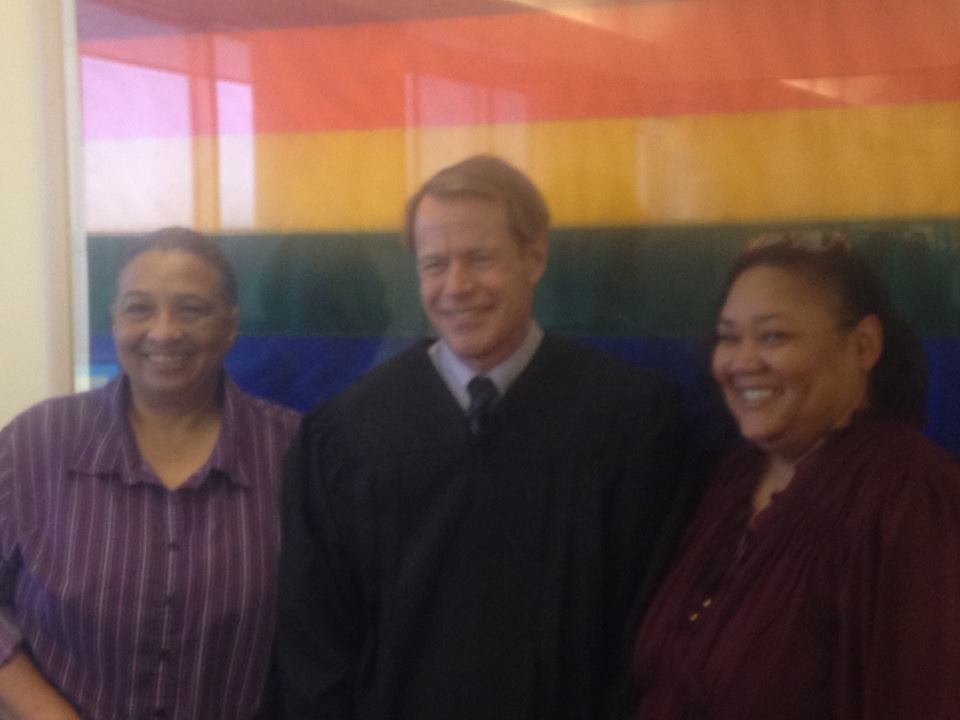
Friday, July 5th – After being together for 18 years, raising a child together…Councilman Yaeger married us.  As we drove home after our impromptu wedding and reception, one of my father’s favorite songs started playing on the radio (Duke of Earl).  Beyond random, but I knew it meant he was with us…watching over the family.

Seven Years…

Standard

533878_10151522505827162_1935172494_nSeven years…

Has it really been seven years since Dad embarked on a new journey without us?  Has it really been seven years since a little piece of each of us left with him?  He would be so proud of each of us….  Carlos living strong and proud and still fighting for what he believes in. Christian married to the woman of his dreams, finishing his PhD, a principal…and still feeling his heart beat with every tap on his drum.  Easley keeping the streets safe, loving his perfect mate, and raising his son with the same love we each received from our father. Me…back in school working on that PsyD, working hard and learning to love myself a little more each day. To see my little Forest graduating college this year and ready to embark on the next chapter in his life – brings me great joy.  I know dad would be proud.  I am proud… to be a part of the legacy that dad created for each of us.  He breathes life through everything we do.  We are blessed to have shared in his world.

Social Phobias

Standard

ImageRonald J. Comer defines “social phobias” as a severe and persistent fear of social or performance situations in which embarrassment may occur.

The DSM IV checklist for social phobias includes: 1) marked and persistent fear of social or performance situations involving exposure to unfamiliar people or possible scrutiny by others, lasting at least six months with concern about humiliating or embarrassing oneself – check;  2) Anxiety usually produced by exposure to the social situation – check; 3) Recognition that the fear is excessive or unreasonable – check;  4) Avoidance of feared situations – check; 5) Significant distress or impairment – check again!

Like most helping professionals we all become obsessed hypochondriacs while we are studying.  At some point in our studies we determine that we must be suffering from some rare disorder and that we are somehow “broken”.  In this case, I actually DO suffer from social phobias.

As a little kid I was pretty shy.  I seldom spoke and always preferred to sit alone and listen to music while I drew pictures in my sketchbooks.  Pair that with a few traumatic events and you have the kind of psychic chaos that is destined to evolve into some kind of disorder.  Fast forward a few decades, add years of therapy, regular exercise, meditation, and the right mix of meds and you have someone (like me) that might actually be able to function in the real world.  That is not to say that I don’t still feel waves of panic, break out into sweats, feel tingly in my hands, and start to hyperventilate when I have to speak publicly, or when I have to interact with people I don’t know, or engage in behavior that isn’t “comfortable”.  It just means that I am less likely to puke on your shoes or pass out while doing it.

Treatment doesn’t “cure” the disorder, but it does make it bearable.  With the proper care and treatment some individuals that suffer from social phobias can go on to have really fulfilling lives.  I have a great son, a wife that I regularly drive crazy, and a few really good friends that I adore.  They all keep me humble and remind me of how far I have come in life and how much more there is to do before I’m gone.